- Emaar announced the Dubai Square Business District on 9 November 2026.
- The planned commercial and office district spans 300,000 square metres.
- Emaar puts the total development value at AED12 billion.
- The district is planned beside Dubai Square in Dubai Creek Harbour.
- Emaar says two metro stations will serve the district directly, while three stations are planned across the wider community.
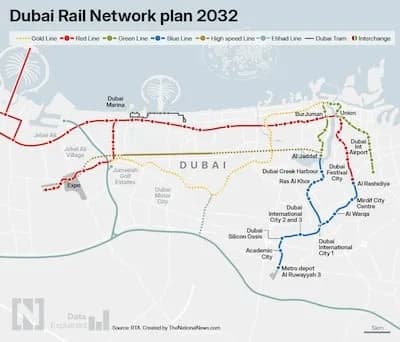
- Dubai’s Roads and Transport Authority confirms that the Blue Line will include an iconic station at Dubai Creek Harbour and is scheduled to open on 9 September 2029.
- Four hotels and three urban parks are planned around Dubai Square.
- The wider masterplan is designed for about 200,000 residents in more than 200 residential towers and 75,500 homes.
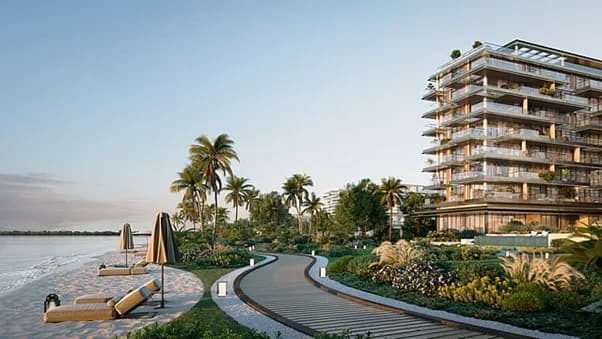
- Emaar says the wider community will include 15 parks, four ecological green corridors, a 4.5-kilometre promenade and a 600-metre urban beach.
- For investors, the announcement strengthens the community’s employment and transport case, but purchase price, apartment position, competing supply and delivery remain decisive.
The 300,000-square-metre commercial district could give Dubai Creek Harbour a stronger economic purpose, but overseas buyers still need to test the individual apartment, price and delivery timeline.*
What changes when a waterfront residential community gains an AED12 billion business district, direct metro connections and a major retail centre at its core?
For overseas investors looking at Dubai Creek Harbour, that is the useful question behind Emaar’s latest announcement. The developer has unveiled plans for 300,000 square metres of commercial and office space around Dubai Square, supported by hotels, parks, transport links and the proposed Dubai Creek Tower. It is a substantial statement of intent for a community that has often been discussed mainly in terms of waterfront apartments and views of Downtown Dubai.
The announcement matters because successful residential communities need more than attractive buildings. They need reasons for people to be there on an ordinary Tuesday morning: work, transport, schools, healthcare, retail and leisure. A commercial district can deepen that daily purpose. It can also broaden the pool of people who may want to rent or own nearby.
But an announcement is not the same as a completed district, and a strong masterplan does not make every apartment within it equally compelling. The sensible investor response is neither to dismiss the news nor to price in every proposed benefit immediately. It is to ask what has been confirmed, what remains planned and how much of that promise is already reflected in the price being asked today.
What Emaar has announced
Emaar’s press release, dated 9 November 2026, describes a new commercial and office district beside Dubai Square with a total development value of AED12 billion. The company says the district will contain 300,000 square metres of premium commercial and office space, with office towers arranged around the retail and mixed-use centre.
The wider plan combines offices, homes, shops, restaurants, hotels, parks and waterfront amenities. Four hotels and three urban parks are planned around Dubai Square itself. Across the broader Dubai Creek Harbour masterplan, Emaar refers to eight hotels, 15 parks, four ecological green corridors and open space accounting for 13% of the plan.
Emaar also says the community is designed for approximately 200,000 residents, with more than 200 residential towers and 75,500 homes. Supporting facilities are planned to include seven schools, 14 nurseries, two hospitals, 25 clinics, 11 mosques and more than 70 community shops. Along the water, the plans include a 4.5-kilometre promenade and a 600-metre urban beach.
Those numbers are significant, but their status needs to be understood correctly. They come from Emaar’s masterplan announcement and describe the intended scale of the completed community. They should not be read as a list of facilities operating today.
That distinction matters to anybody buying from abroad. A completed amenity can be inspected and valued. A planned amenity must be assessed through its delivery path, the developer’s record and the amount of time the investor is prepared to hold.
The more important shift is economic, not architectural
The most eye-catching element is the proposed Dubai Creek Tower. Yet for a property investor, the commercial district may be more important than the landmark.
A tower can establish identity and draw attention. Offices create weekday activity. They bring employees, clients and service businesses into a community. Hotels introduce business visitors. Shops and restaurants gain a customer base that does not depend entirely on residents or weekend traffic. In a mixed-use district, these elements reinforce one another.
Mohamed Alabbar, founder of Emaar, put the ambition plainly: “We did not set out to build an office district. We set out to build the address every ambitious company in the world dreams of. Dubai Square is that address.”
The language is naturally promotional. The investment point underneath it is more practical. Dubai Creek Harbour is being positioned as a place to work as well as live. If that commercial role is delivered, it could reduce the community’s reliance on residential launches alone and create a more varied base of occupiers.
That does not automatically translate into higher rents or sale prices. Tenant demand still depends on the apartment’s size, layout, view, floor, condition, service charges and competing stock. Resale depends on what a future buyer can choose at the same time. The new district improves the context; it does not remove the need to judge the asset.
Transport is the part investors should verify carefully
Emaar says two metro stations will serve the business district directly and that offices will connect to them through climate-controlled links. It also refers to three metro stations, 17 bus stops and a seven-kilometre Discovery Loop across the wider Dubai Creek Harbour community.
Separately, Dubai’s Roads and Transport Authority confirms that the 30-kilometre Blue Line will include 14 stations, among them an iconic station at Dubai Creek Harbour. RTA states that the line is scheduled to open on 9 September 2029 and will connect with the existing Red and Green lines.
For an overseas buyer, the wording matters. The Blue Line and its Creek Harbour station are official transport projects, but they are not operating yet. Emaar’s broader description of stations serving the district is part of the announced plan. Buyers should therefore check the current RTA programme, the precise location of the apartment and the actual walking route rather than relying on a broad claim that a property is “near the metro”.
Distance on a masterplan can look small while feeling very different on the ground. Road crossings, podiums, construction plots and access points all affect the daily journey. A five-minute straight line is not always a five-minute walk.
The right question is not simply whether Creek Harbour will have a metro. It is whether the particular apartment will benefit from convenient access without taking on the noise, traffic or construction exposure that can accompany a major station.
Why this matters to an overseas investor
The strongest investment case is based on utility. A community with workplaces, public transport, retail, schools, healthcare and leisure has more reasons to attract residents with different needs. That can support a broader rental audience and a more diverse pool of future buyers.
There are three potential benefits worth examining.
First, the commercial district could create employment-led housing demand. Someone working in the new office district may value a short journey more than a tourist-style view. That could make practical apartments with good access relevant to a different tenant profile. The exact benefit will depend on which companies occupy the space, how much office stock is delivered and when.
Second, the Blue Line can improve connectivity for residents who do not want every journey to depend on a car. For an overseas owner, transport access can make an apartment simpler to market to tenants and more useful to family members visiting Dubai. Again, the apartment’s real walking route matters more than the community-level label.
Third, the combined plan offers lifestyle value. Waterfront paths, parks, hotels, shops, restaurants and an urban beach can make the community appealing beyond working hours. For some buyers, the apartment may serve both as an investment and as a base in Dubai. That dual use can be valuable, provided the numbers still work when personal preferences are removed from the calculation.
Dubai’s wider market provides important context. Dubai Land Department says real estate transactions reached approximately AED917 billion in 2025 and that the market attracted more than 100,000 first-time registered investors. DLD also recorded 1.38 million tenancy contracts with a total value of AED126.4 billion in 2025. These are market-wide figures, not Creek Harbour figures, but they show the scale of the system in which this masterplan sits.
Emaar’s own financial position is relevant as well. The company reported AED34.7 billion of property sales in the first nine months of 2026 and a property-sales revenue backlog of AED158.8 billion at 30 September 2026. It also reported handing over more than 4,800 homes in the UAE during that period. These are company disclosures rather than an independent guarantee of any single project, but they provide useful evidence when assessing execution capacity.
Residency can be a benefit, but it should not drive the purchase
Property ownership can also have a residency dimension for overseas buyers. The UAE Government’s official portal states that qualifying real estate investors with property worth at least AED2 million may be eligible for a five-year Golden Visa, subject to the applicable conditions and approval process. Golden Visa holders may also sponsor eligible family members.
That can improve the practical value of owning in Dubai. Long-term residency can support family plans, business activity and more flexible time in the UAE. It is a legitimate part of the decision, especially for an investor who wants a regional base rather than a purely remote asset.
However, residency rules can change and personal eligibility varies. A buyer should confirm the current requirements with the relevant authority and obtain independent legal and tax advice. An apartment should make sense as property before the visa benefit is added.
The four checks I would make before committing
I would use four tests rather than buying the headline.
1. What exists, what is contracted and what is still planned?
Separate completed infrastructure from work under construction and longer-term masterplan elements. Ask for the official project registration, anticipated completion date, construction payment schedule and the contractual position if timing changes. Apply the same discipline to nearby amenities.
2. Who is the likely tenant or future buyer?
Do not settle for “professionals”. Define the person. Are they working in Creek Harbour, elsewhere on the Blue Line or in a district reached mainly by car? Would they choose a studio, a one-bedroom apartment or a family home? What competing apartments can they rent or purchase at the same budget?
3. Is the price justified without assigning full value to planned amenities?
Compare the apartment with completed and resold homes, not only other launch prices. Look at the price per square foot, total acquisition costs, service charges, view protection, payment dates and likely competing supply at handover. A strong announcement can improve sentiment quickly; physical delivery takes longer.
4. Does the exact position work?
In a large masterplan, two apartments carrying the same community name can have very different outcomes. Check the floor, orientation, neighbouring plots, road exposure, station access, afternoon sun, layout efficiency and the view after surrounding plots are developed. The map around the building matters as much as the brochure inside it.
This is where experienced, buyer-focused advice earns its place. If you are considering Dubai Creek Harbour from overseas, contact me, Steven Leckie, or my team at haus & haus before committing. We can compare the specific apartment with ready and off-plan alternatives, test the asking price against current evidence and tell you plainly where the case is strong and where it is relying on assumptions.
My view: a stronger community case, with a clear limit
The Dubai Square Business District is a meaningful addition to the case for Dubai Creek Harbour. It gives the community a clearer commercial role, connects the residential masterplan to a substantial office destination and supports a more complete live-work environment. The confirmed Blue Line project adds credibility to the transport story, while Dubai Square, the hotels, parks and waterfront amenities add depth to the lifestyle offer.
But the announcement should change the questions an investor asks, not lower the standard of evidence required.
The useful comparison is not between Creek Harbour today and the completed masterplan presented by Emaar. It is between the price of the apartment today and the mix of delivered, under-construction and planned benefits supporting that price. If the purchase works only when every proposed element is delivered exactly as described, the margin for error is too narrow.
My verdict is simple: the business district strengthens Dubai Creek Harbour’s long-term utility, but the individual apartment must still justify its price, position and competition.
For the next step, ask for a three-column assessment of the property: what is there now, what is formally under way and what remains an ambition. That single exercise will tell you far more than another set of renderings.