- Branded serviced residence project on Dubai Islands
- Operated by an established international hospitality group
- Developed by Avenew Development and Wadeen Developers
- Beachfront location within a long-term masterplan
- Limited to 99 units
- Mix of one to three bedroom apartments
- Fully serviced, hotel-style ownership model
- Completion expected around 2029
- Designed for income and long-term holding
- Targets global investors and multi-city residents
What if the most valuable property in Dubai over the next decade is not the biggest, not the tallest, and not even the most expensive?
What if it is the one that behaves like a hotel?
That is exactly the shift we are starting to see, and Cheval Residences Dubai Islands is one of the clearest examples.
This is not just another beachfront launch. It is a signal. A signal that global real estate is moving away from pure ownership and towards experience-driven, income-producing assets.
Let’s break it down properly.
The rise of serviced living and why it matters
For years, Dubai has been driven by two main buyer profiles. End users seeking lifestyle and investors chasing capital growth.
Now there is a third category gaining serious traction.
The global resident.
People who do not live in one city. People who move between London, Dubai, Riyadh, and Singapore. People who want flexibility, service, and consistency.
That demand is exactly what Cheval Residences is built around.
According to the project details, the development is designed to combine full-service hotel operations with the comfort and privacy of long-term residential living.
What this really means is simple.
You are not just buying a property. You are buying into a managed ecosystem.
And that changes everything about how returns are generated.
Dubai Islands and the long game
Let’s talk about location, because this is where most people get it wrong.
The Dubai Islands are not Downtown. It is not Dubai Marina. It is not trying to be.
It is being built as a lifestyle destination. Low density, waterfront, tourism driven.
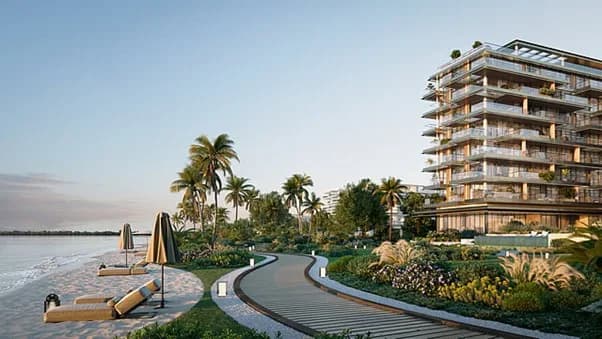
If you look at the masterplan visuals in the brochure, the focus is obvious. Wide beaches, landscaped walkways, integrated communities, and a clear emphasis on resort style living rather than urban density.
That is important.
Because when you invest in a location like this, you are not buying today’s value. You are buying future positioning.
We have seen this before.
Palm Jumeirah was not always what it is today. Dubai Hills was not always a premium address. Even Downtown had its doubters.
Dubai builds in phases. Early investors take the uncertainty; later investors pay the premium.
The question is always the same.
Do you want certainty, or do you want upside?
The power of the operator
Here is where most investors either win or lose in projects like this.
The operator.
Cheval Collection is not just a name on a brochure. They already operate serviced residences globally, including in Dubai, including Cheval Maison on Palm Jumeirah and Expo City.
That matters more than people think.
Because in a serviced model, your returns are directly linked to:
- Occupancy rates
- Guest experience
- Pricing strategy
- Brand positioning
If the operator performs, the asset performs.
If they do not, the property becomes average very quickly.
This is why branded residences have become one of the fastest growing segments globally.
Investors are no longer just buying square footage. They are buying operational expertise.
Limited supply in a city of scale
Dubai is known for scale. Large launches, thousands of units, constant supply.
This project is the opposite.
99 units.
That is it.
In a market where oversupply is always the headline risk, controlled inventory is a serious advantage.
It gives pricing power. It supports occupancy. It creates scarcity.
And scarcity, when paired with the right product, tends to hold value better over time.
The investment case, without the sales pitch
Let’s strip away the marketing and talk about reality.
Where this works
This works for investors who understand:
- Income over quick resale
- Long-term positioning
- Hospitality driven returns
It also works for buyers who want a hybrid asset. Something they can use personally, while still generating income when they are not in Dubai.
Where people get it wrong
This does not work for:
- Short-term flippers
- Investors chasing immediate capital appreciation
- Buyers who underestimate service charges
Because here is the truth.
Serviced assets come with higher running costs. And your returns depend on performance, not just on market movement.
Why overseas investors are paying attention
There is a reason this model is attracting international capital.
Dubai offers something very few markets can combine:
- No income tax
- Strong rental yields
- Growing population
- Stable governance
- Global connectivity
Now add a professionally managed hospitality model on top of that.
You are effectively creating an asset that can generate income in a tax-efficient environment, while also benefiting from long-term market growth.
For high-net-worth investors, that combination is difficult to ignore.
Lifestyle is no longer a bonus; it is the product
Look at the visuals in the brochure, and it is obvious what is being sold.
Beachfront living
Resort style pools
Wellness spaces
Seamless indoor outdoor design
But here is the key point.
This is not just lifestyle for the owner. It is part of the investment strategy.
Because in hospitality driven real estate, experience drives revenue.
Better experience means higher occupancy. Higher occupancy means stronger returns.
So the design is not just aesthetic. It is commercial.
A broader shift in Dubai real estate
Cheval Residences is not an isolated project.
It is part of a wider trend.
Dubai is moving towards:
- Branded residences
- Serviced living
- Lifestyle driven communities
- Experience led assets
This aligns directly with the Dubai 2040 Urban Master Plan, which focuses on coastal development, tourism, and quality of life.
What this really means is that the city is evolving.
And investors who understand where it is going, rather than where it has been, tend to benefit most.
So, is it a good investment?
Here is the straight answer.
It depends on your strategy.
If you are looking for a quick flip, no.
If you are looking for a long term, income generating asset in a growing waterfront location, then it becomes a much more interesting conversation.
The fundamentals are there.
The operator is credible.
The supply is limited.
The location has long term upside.
But like any investment, execution will decide the outcome.
Final thought
The biggest mistake investors make in Dubai is buying what worked yesterday.
The smart ones look at what is being built for tomorrow.
Cheval Residences Dubai Islands sits firmly in that second category.
Not obvious. Not mass market. Not for everyone.
But that is usually where the opportunity is.
Next step
If you are based overseas and looking at Dubai, the biggest mistake you can make is choosing a property before choosing a strategy.
That is where most people go wrong.
If you want to understand how something like this fits into your portfolio, based on your numbers and your timeline, click here and let’s arrange a call:
https://www.stevenleckie.com/contact
We will keep it straightforward and focused on what actually works for you.ure