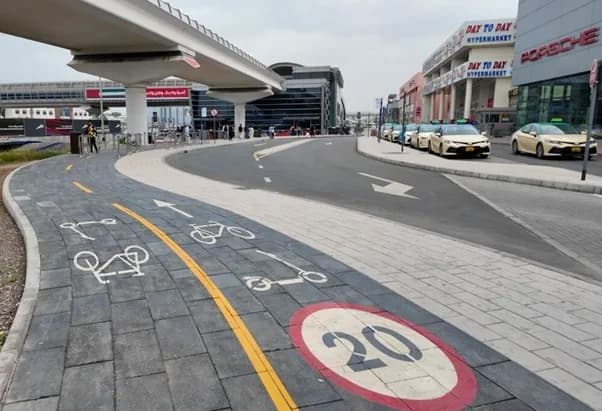
- Dubai has completed 13 new cycling tracks as part of a 15-track masterplan
- Total expansion adds 162 kilometres to the cycling network
- The city is targeting a 1,000-kilometre cycling network by 2030
- New routes connect residential areas to metro stations and key destinations
- A 7-kilometre route now links Al Quoz to Onpassive Metro Station
- Al Barsha 2 and Al Khawaneej 2 received a combined 18.5 kilometres of new tracks
- Cycling trips increased to 57.3 million in 2025, up 23.5 percent
- 22.3 percent of Dubai’s population now has access to cycling infrastructure
- Dubai is now ranked among the top 100 cycling friendly cities globally
- Major bridge connections are under construction to improve cross city access
Let’s start with a simple question.
When was the last time a cycle track made you think about property prices?
Probably never.
And yet, here is the thing. Infrastructure like this is exactly where long-term value is built. Quietly, steadily, and often before most investors notice.
Dubai has just added another 162 kilometres of cycling tracks across the city, taking a meaningful step towards a 1,000 kilometre network by 2030. On the surface, it sounds like a lifestyle story. Health, sustainability, maybe a bit of urban branding.
Look closer and it becomes something else entirely.
This is about connectivity. Movement. Accessibility. And those three things sit right at the core of property value.
The Bigger Picture Most People Miss
There is a tendency to look at real estate through a narrow lens. Price per square foot. Rental yield. Short term fluctuations.
What gets overlooked is what actually drives those numbers over time.
Infrastructure.
Not just roads and highways, but the detail. The layers. The small improvements that make a place easier to live in.
Dubai’s cycling expansion is not random. It has been planned with a very specific intent. Link residential communities to transport hubs. Connect lifestyle areas. Improve first and last mile access.
That phrase matters more than most people realise.
First and last mile is the gap between where transport drops you and where you actually need to be. If that gap is solved well, demand increases. If it is not, friction builds and value stagnates.
Dubai is solving it.
From Lifestyle Upgrade to Investment Signal
Take areas like Al Barsha and Al Khawaneej.
On paper, these are established residential zones. Already functional. Already populated.
Now they are becoming more connected, more accessible, and more liveable.
What this really means is simple. The pool of potential tenants and buyers expands.
Someone working near a metro line can now consider living further out, because access is easier. Someone choosing between two similar properties may lean towards the one with better mobility options.
Over time, these small decisions stack up.
Demand shifts.
And when demand shifts, prices follow.
Why Connectivity Always Wins
Look at any mature property market in the world.
London. Copenhagen. Amsterdam.
The pattern is always the same.
Areas that are better connected outperform those that are not.
Dubai is moving in that direction at pace.
The new cycling routes are not isolated. They are part of a wider integrated network linking areas like DIFC to Jumeirah, Al Warqa’a to Saih Al Salam, and Al Khawaneej to Al Mamzar Beach.
Add to that the upcoming bridges over Sheikh Zayed Road, Al Khail Road, and Sheikh Mohammed bin Zayed Road, and you start to see the scale of what is being built.
This is not cosmetic.
This is structural.
The Data Behind the Shift
The numbers tell a clear story.
Cycling trips in Dubai rose from 46.6 million in 2024 to 57.3 million in 2025. That is a 23.5 percent increase in just one year.
At the same time, 22.3 percent of the population now has access to cycling infrastructure.
And perhaps most interesting of all, Dubai has entered the top 100 cycling friendly cities globally. The first city in the Middle East to do so.
This is not about bikes.
This is about behaviour change.
And behaviour change is what drives long term real estate performance.
What This Means for Overseas Investors
If you are investing from overseas, you are relying on signals.
You are not here every day. You are not driving these roads. You are not seeing how people move and live.
So the question becomes, how do you read the market properly?
You follow infrastructure.
Because infrastructure does not lie.
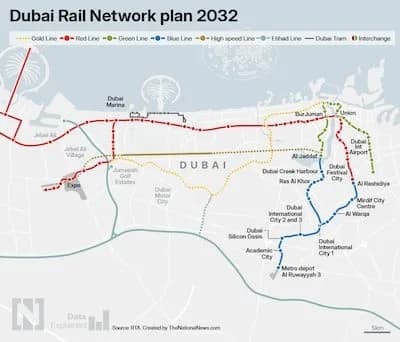
When a city invests at this level, with this level of planning, it is telling you exactly where it is going.
Dubai is not just expanding outward. It is improving how everything connects.
That has three direct implications for investors.
First, stronger tenant demand in well connected areas
Second, improved long term capital growth in infrastructure linked communities
Third, increased resilience during market slowdowns
Because when sentiment dips, fundamentals take over
And connectivity is one of the strongest fundamentals there is
The Hessa Street Effect and What Comes Next
If you want a real example, look at what is happening around Hessa Street.
Ongoing development is not just about reducing traffic. It is about unlocking entire areas.
Communities like JVC, Al Barsha, and Dubai Hills benefit directly when access improves.
Commute times drop.
Convenience increases.
Perception shifts.
And when perception shifts, pricing follows.
The new cycling tracks linking Al Sufouh to Dubai Hills through Hessa Street take that one step further.
Now it is not just about cars.
It is about options.
And more options always mean broader appeal.
Where Most Investors Get It Wrong
Here is the honest truth.
Most investors react.
They wait for headlines. They chase price movements. They look for confirmation.
By the time something is obvious, it is usually priced in.
The smarter move is to look ahead.
Not guesswork. Not speculation.
Just paying attention to what is actually being built.
Dubai’s cycling network is a perfect example.
It is not being talked about as a major investment driver.
But it will be.
A Subtle Shift Towards End Users
There is another layer here that matters.
Dubai is evolving from a primarily investor-driven market to a more balanced one with stronger end-user demand.
End users care about lifestyle.
They care about accessibility. Walkability. Ease of movement.
Cycling infrastructure feeds directly into that.
Which means areas that might previously have been considered secondary start to move up the ladder.
And that creates opportunity.
The Long Term View
Real estate has always been a long-term game.
Short-term noise comes and goes.
But infrastructure stays.
What Dubai is building now will shape the market for the next decade.
Not next quarter.
Not next year.
The next ten years.
And that is where serious investors focus.
So What Should You Do
If you are looking at Dubai from overseas, this is the moment to step back and look at the bigger picture.
Not just the property.
The area. The connectivity. The future plans.
Because that is where the real decisions are made.
And if you get that right, everything else tends to follow.
Final Thought
Dubai is not standing still.
It is refining. Improving. Connecting.
And while most people are focused on short-term sentiment, the city is quietly building the next phase of its growth.
The question is not whether this will have an impact.
It is whether you position yourself before or after that impact is fully recognised.
If you want to understand how these shifts translate into actual opportunities, and more importantly what fits your specific goals, that is where a proper conversation starts.
Because no two strategies are the same.