- S&P Global Ratings affirmed the UAE’s sovereign credit rating at AA/A-1+ with a stable outlook in March 2026.
- The agency’s view is that the UAE’s fiscal, external and policy flexibility should act as a strong buffer against regional conflict.
- S&P estimates the UAE’s consolidated net asset position at 184 per cent of GDP in 2026, which is extraordinary by global standards.
- Government liquid assets are estimated at roughly 210 per cent of GDP, giving the country deep reserves to manage shocks.
- UAE government debt remains low at around 27 per cent of GDP in 2026.
- S&P expects economic growth to slow to 2.2 per cent in 2026, down from 5 per cent in 2025, mainly due to weaker tourism, softer real estate demand and lower investor confidence during the conflict.
- Even with slower growth, S&P still expects the UAE to maintain an average fiscal surplus of 2.6 per cent of GDP through to 2029.
- The agency sees the risk to trade and oil exports as manageable, partly because the ADCOP pipeline to Fujairah allows around half of Abu Dhabi’s oil exports to bypass the Strait of Hormuz.
- Banks in the UAE remain well-positioned, with strong liquidity and solid external asset positions, which helps reduce the risk of financial instability.
- For property investors, the real message is not that the UAE is immune to shocks. It is that the country has the financial muscle, state capacity and investor infrastructure to absorb them better than most.
What does it say about a country when a major ratings agency looks at war in the region, weaker growth, softer sentiment and pressure on trade, then still says: stable?
That is the real story here.
S&P Global Ratings has affirmed the United Arab Emirates at AA/A-1+ with a stable outlook, and for anyone watching Dubai through the narrow lens of headlines, that matters far more than most people realise. This is not just a technical credit update for bond investors in dark suits staring at Bloomberg screens. It is a serious vote of confidence in the UAE’s financial strength, policymaking ability and institutional capacity to manage disruption.
For overseas property investors and high-net-worth buyers, this is particularly relevant. Dubai property does not operate in a vacuum. Confidence in the market is tied to confidence in the wider country. When the sovereign balance sheet is strong, the banking system is sound, fiscal buffers are deep and the government can keep investing through uncertainty, that creates an entirely different backdrop for real estate.
And that is exactly why this latest decision from S&P deserves attention.
The agency did not pretend everything is perfect. In fact, it explicitly lowered its growth outlook for the UAE this year. S&P now expects real GDP growth of 2.2 per cent in 2026, down from 5 per cent in 2025, with pressure likely to come from weaker tourism, softer investment sentiment and a more cautious tone in parts of the real estate and financial services sectors.
That sounds like a downgrade in mood, because it is. But it is not a loss of faith.
The distinction matters.
S&P’s base case remains that the UAE’s substantial fiscal, economic, external and policy flexibility will act as an effective buffer against regional conflict. In plain English, the agency is saying the UAE has enough money, enough options and enough state capacity to take a hit without losing control of the bigger picture.
That is not a small point. It is the core investment case.
The headline figure that jumps off the page is the estimate of the government’s consolidated net asset position at 184 per cent of GDP in 2026. That is massive. Add in estimated government liquid assets of around 210 per cent of GDP, and you are looking at a sovereign with unusually deep reserves.
At the same time, public debt is expected to remain low at roughly 27 per cent of GDP.
So yes, growth may soften this year. Yes, regional instability has consequences. Yes, confidence can wobble in the short term. But the UAE is entering this period from a position of strength, not fragility. There is a world of difference between an economy slowing down and an economy becoming structurally unsafe for capital.
That is where a lot of commentary goes wrong.
People often confuse short-term tension with long-term impairment. They see conflict in the region and assume everything in the Gulf must suddenly become uninvestable. Markets are rarely that simplistic. Serious investors ask a different question: which jurisdictions can absorb shocks and recover fastest?
On that measure, the UAE continues to stand out.
Dubai property investors should take this seriously because sovereign strength filters through to real estate in several ways.
First, it supports confidence in the banking system. S&P is clear that UAE banks remain resilient, liquid and well placed to handle risks such as capital outflows. It expects loan growth to continue and sees no major contingent liabilities coming from the banking sector in the next few years. For property buyers, especially financed buyers, this matters. A stable banking environment helps preserve liquidity, supports mortgage activity and reduces the chance of a credit squeeze.
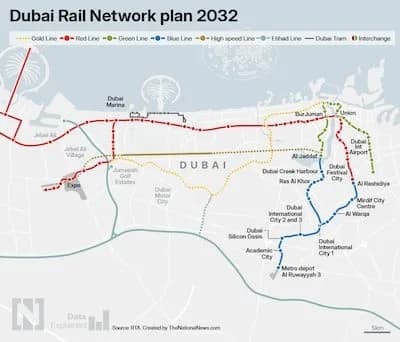
Second, it supports ongoing infrastructure spending and state-backed development. S&P expects the UAE government to maintain spending plans despite geopolitical uncertainty. That matters in Dubai because infrastructure is not window dressing here. It is part of the real estate story. Transport corridors, master planned communities, district upgrades and economic zones all shape future demand, rental appeal and pricing power.
Third, it supports broader investor confidence. High-net-worth buyers do not just purchase square footage. They buy into systems. They look at legal clarity, currency stability, ease of ownership, wealth protection, tax efficiency and the quality of local institutions. A sovereign rating affirmation at AA/A-1+ with a stable outlook reinforces the idea that the UAE remains one of the more credible places globally to park capital.
Now, let’s be honest about the other side of the equation.
S&P expects the conflict to weigh on sectors such as tourism, trade, supply chains, and financial services. It also notes that real estate demand may soften in the short term. That should not be brushed aside. In any uncertainty event, sentiment becomes more selective. Some buyers pause. Some become more price sensitive. Some vendors become more negotiable. And some investors who were leaning into momentum suddenly remember they have nerves.
Frankly, that is not always bad news.
Because periods of uncertainty often create the best moments for disciplined buyers. Not bargain hunting for poor quality stock dressed up as distressed opportunity, but selective entry into strong assets when the crowd is hesitating.
That distinction is everything.
In my view, one of the biggest mistakes overseas investors make in Dubai is waiting for perfect clarity. By the time the market feels comfortable to everyone, the best units are gone, the sharpest developers are fully subscribed, and the pricing has already moved. The market rarely sends a polite engraved invitation saying now is the perfect time to buy.
What S&P’s report suggests is that while the near term may be noisier, the structural pillars under the UAE remain very much intact.
The non oil economy still accounts for about 75 per cent of GDP. The current account is still expected to remain in surplus. Fiscal balances are still projected to stay positive. Inflation is still modest, at around 1.5 per cent. The banking system is still sound. The dirham remains pegged to the US dollar. And the state still has exceptional financial reserves.
That does not describe a market falling apart. It describes a market that may bend, slow and reprice in pockets, but remains fundamentally investable.
For overseas buyers, this is where Dubai continues to offer a compelling mix that few cities can match.
There is the potential for capital growth, particularly in well selected areas with scarcity, brand value or infrastructure tailwinds.
There is the income story, with gross rental returns in many parts of Dubai still far stronger than what investors can achieve in London, Paris or many mature gateway cities.
There is the lifestyle component, which matters more than many analysts admit. Buyers are not only looking for returns. They are looking for a place where they can spend time, educate children, build a regional base, enjoy security and access a better day-to-day environment.
Then there is residency.
For many international investors, the UAE’s residency pathways remain part of the attraction. Property ownership can play a meaningful role in securing a foothold in the country, creating optionality for business, family relocation or simply long term strategic flexibility. In an era where wealthy families increasingly think in terms of multiple bases rather than one home country, that matters.
And unlike some jurisdictions where policy feels like a moving target after every election cycle, the UAE has built a reputation for long range planning and execution. That does not mean it is perfect. S&P itself points to weaker transparency in some areas of federal and emirate level disclosure. But the broader direction of travel remains clear: attract capital, deepen markets, expand infrastructure, support growth and stay globally relevant.
That is a far more important signal than the noise of any single week.
For the Dubai property market specifically, I suspect the next phase will favour quality over volume. Buyers are likely to become more selective, not disappear. Projects with strong locations, sensible launch pricing, credible developers and real end user appeal should continue to outperform. Trophy stock at the top end will likely remain resilient because global wealth still values safe, well connected and tax efficient jurisdictions. Mid market family communities should also stay supported where schooling, connectivity and liveability are strong.
Where I would be more cautious is with anything that relies purely on hype. Weak layouts, inflated launch prices, secondary locations with no clear demand story, or projects sold more on fantasy than fundamentals could find life harder if sentiment stays sensitive.
That is why investor due diligence matters more now, not less.
You are not buying into a generic city story. You are choosing a district, a product type, a developer and a timing strategy.
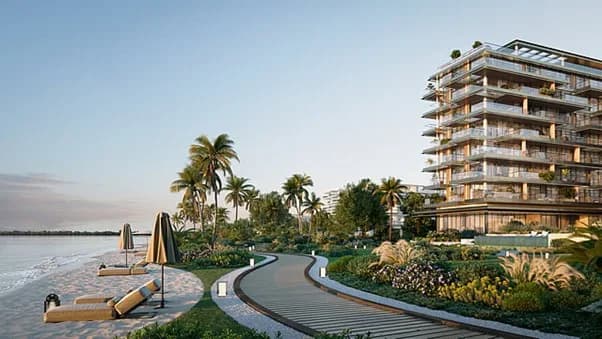
For example, branded residences, waterfront schemes, low supply villa communities, and areas linked to major infrastructure or business expansion tend to hold attention for longer. Likewise, projects with payment plans aligned to handover and realistic rental or resale demand deserve a closer look than anything being pushed as a miracle deal because someone used the word exclusive nine times in a brochure.
Here’s the thing. Real estate rewards clarity, not drama.
And clarity today looks something like this: the UAE faces a more difficult regional backdrop, growth is slowing in the short term, but the country remains financially strong, institutionally capable and strategically attractive. S&P has effectively said as much.
That will not stop volatility. It will not stop scary headlines. It will not stop nervous WhatsApp messages from friends abroad who think all of Dubai must be hiding under a table because they saw a dramatic television graphic.
But for serious investors, it should sharpen the conversation.
Not should I panic, but where is the mispricing?
Not is Dubai finished, but which assets still make sense if the next six months are more cautious?
Not can the UAE survive this, but how is it positioned relative to other global wealth hubs?
In my opinion, that relative comparison is where Dubai keeps winning.
Few places combine tax efficiency, residency appeal, infrastructure ambition, currency stability, strong air connectivity, high quality new build stock and a government that can still spend through uncertainty. Fewer still do it while remaining open, commercially minded and increasingly relevant to global capital flows from Europe, Asia, Africa and the wider Middle East.
That is why overseas investors should not read this S&P update as a dry macro note. They should read it as confirmation that the foundations under the UAE remain very strong, even in a tougher year.
And in property, foundations matter more than noise.
For anyone based overseas and weighing whether to enter the market, expand an existing portfolio or wait for a clearer signal, this is the moment to look harder, not look away. The best strategy now is not blind optimism and it is not fear. It is selective conviction.
If you want to understand which parts of Dubai still offer real upside, where demand is likely to stay resilient, and how to balance capital growth, rental income and residency value, that is where a sharper conversation makes all the difference.
Steven Leckie has been in Dubai since 2003 and works directly with overseas investors looking to make smart, well timed decisions in a market that often moves faster than the headlines. If you want clear advice grounded in what is actually happening on the ground, not recycled noise from abroad, now is a very good time to have that conversation.
Because when a country is stress tested and still comes back rated AA with a stable outlook, the smart question is not whether it still deserves attention.
It is whether you are early enough to take advantage of what comes next.