-
Dubai rental contracts reached AED126.4bn in 2025, rising 17% year on year.
-
Total tenancy contracts increased 6% to 1.38m agreements.
-
New tenancy contracts grew 10%, reflecting strong inbound population demand.
-
Renewals rose 3%, signalling tenant stability and satisfaction.
-
Property sales climbed 25% to 147,500 units worth AED280bn.
-
Project completion value increased 23% to AED27.5bn.
-
Projects under construction rose 25%, showing developer confidence.
-
Villa values increased 12% despite lower transaction volumes.
-
Real estate offices doubled, increasing 102% to over 10,000 active firms.
-
More than 14,000 new real estate licences were issued across the sector.
Dubai’s Rental Boom Signals a Maturing Market and a New Era for Global Property Investors
What happens when a real estate market stops behaving like an emerging opportunity and starts acting like a global financial asset class?
Dubai in 2025 may have just answered that question.
Rental contracts across the emirate reached AED126.4bn, equivalent to $34.4bn, marking not just another strong year but a structural shift in how Dubai’s property ecosystem functions. Beneath the headline numbers lies something far more important for overseas investors: stability, institutional maturity and predictable growth.
For investors watching Dubai from London, Singapore, Zurich or Toronto, the message is becoming clearer. This is no longer simply a high growth market driven by cycles. It is evolving into one of the world’s most structured and investable real estate environments.
Let’s break down what is really happening and why it matters.
A Rental Market Driven by Real Demand, Not Speculation
The rental sector often tells the true story of a property market. Sales figures can be influenced by sentiment, but rentals reflect actual people moving, working and building lives.
In 2025, Dubai recorded 1.38m tenancy contracts, a 6% increase compared with the previous year. More telling is the 17% rise in total contract value.
This combination reveals two important dynamics.
First, population growth continues to drive genuine housing demand. New tenancy contracts exceeded 513,000, rising 10% year on year. Dubai remains one of the few global cities experiencing sustained inward migration of skilled professionals, entrepreneurs and high earning residents.
Second, renewal contracts also increased, reaching more than 514,000 agreements. Tenants are staying longer. That signals confidence in lifestyle, employment stability and regulatory protection.
For investors, this matters enormously. Stable tenants mean predictable rental income, lower vacancy risk and stronger long term yield performance.
Put simply, Dubai is transitioning from a transactional market into an occupancy driven one.
Alignment With Dubai’s Long Term Economic Vision
These results are not accidental. They sit directly within the framework of the Dubai Economic Agenda D33 and the Real Estate Sector Strategy 2033.
Both initiatives aim to balance ownership and renting while enhancing quality of life and regulatory transparency. The goal is simple yet powerful: make Dubai one of the most attractive cities globally to live and invest.
What this really means is policy alignment.
Infrastructure, immigration reforms, business licensing and real estate regulation are moving in the same direction. Few global cities achieve this level of coordination.
For overseas investors, coordinated policy reduces uncertainty. Markets become easier to analyse and long term planning becomes realistic rather than speculative.
Project Completions Show Execution Strength
A common concern among international investors is whether supply will keep pace with demand without destabilising prices.
The 2025 data provides reassurance.
Completed projects rose to 124 developments with a combined value of AED27.5bn, representing a 23% increase in execution value. Meanwhile, projects under construction climbed 25% to 937 developments.
This is not uncontrolled expansion. It reflects developer confidence supported by structured regulation and escrow protections.
Dubai has learned from previous cycles. Delivery timelines are increasingly monitored, funding structures are clearer and buyer protection mechanisms continue to improve.
Execution efficiency matters because unfinished supply creates risk. Delivered supply creates income producing assets.
Sales Growth Confirms Investor Confidence
Property sales reached 147,500 units worth AED280bn, increasing 25% in volume and 30% in value.
Interestingly, villa transaction volumes declined slightly while values rose 12%. This indicates a shift toward higher quality assets rather than speculative buying.
Investors are becoming more selective. End users are prioritising lifestyle driven communities. Capital is flowing toward developments with strong master planning and long term infrastructure backing.
That behaviour is typical of markets entering maturity.
An Expanding Regulatory Ecosystem
One of the most overlooked yet powerful indicators of market strength is licensing growth.
Dubai registered 4,122 new real estate offices in 2025, bringing the total to over 10,000 active firms. More than 14,000 licences were issued across brokerage, leasing, development and consultancy services.
This expansion reflects institutional depth.
A broader professional ecosystem improves transparency, competition and service standards. For overseas investors unfamiliar with local markets, stronger regulation reduces reliance on informal networks and increases confidence in transaction processes.
The Dubai Land Department’s continued focus on regulatory development signals a market designed for longevity rather than short term momentum.
Why Overseas Investors Are Paying Attention
From an international perspective, Dubai now offers a rare combination of advantages.
Financial performance
Strong rental growth combined with capital appreciation creates dual return potential rarely seen in major global cities where yields have compressed.
Currency positioning
The AED’s peg to the US dollar provides stability for investors seeking protection from currency volatility.
Tax efficiency
No annual property tax and no income tax on rental earnings remain powerful differentiators compared with Europe and North America.
Residency pathways
Property ownership continues to provide access to long term residency options, offering lifestyle flexibility alongside investment returns.
Lifestyle appeal
Safety, infrastructure, education and healthcare standards continue to attract globally mobile professionals who sustain rental demand.
The result is a market supported by both capital inflows and population growth, a combination that historically underpins long term real estate performance.
The Bigger Shift: Market Maturity
Perhaps the most important takeaway from the 2025 data is not growth itself but maturity.
Dubai’s real estate market is showing characteristics typically seen in established global hubs:
• balanced rental and ownership ecosystems
• increasing tenant retention
• regulatory clarity
• professionalisation of brokerage and development
• data driven policy alignment
Markets reach this phase when confidence shifts from opportunity driven investment to strategy driven investment.
That transition attracts institutional capital, family offices and long term investors rather than purely speculative buyers.
What This Means for Investors Moving Forward
Here’s the thing many overseas investors still misunderstand.
The opportunity in Dubai is no longer simply about buying early in a rising market. It is about positioning correctly within a maturing one.
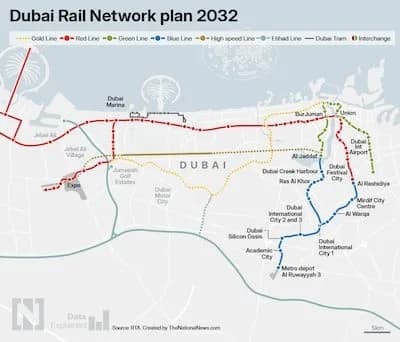
Location selection, developer credibility, payment structures and future infrastructure links now matter more than timing alone.
Investors entering today are participating in a market building long term resilience rather than chasing short term price spikes.
From my experience advising international clients since 2003, the investors who perform best in Dubai are those who treat it as a strategic portfolio allocation rather than a single transaction.
Why Guidance Matters More Than Ever
As the market becomes more sophisticated, navigating it without local expertise becomes increasingly complex.
Not every project benefits equally from growth. Not every developer delivers at the same standard. And not every area responds to population growth in the same way.
For overseas investors especially, understanding where rental demand is forming next and how infrastructure expansion influences pricing is often the difference between average performance and exceptional results.
This is precisely where tailored advisory becomes valuable.
Investors who work with experienced advisors gain access to deeper market interpretation, allocation opportunities and risk management strategies designed specifically for international ownership.
If you are considering entering Dubai’s property market or expanding an existing portfolio, the next logical step is a structured conversation around your objectives, timeline and risk profile.
You can arrange a private consultation directly with Steven Leckie to explore opportunities aligned with your investment strategy and long term goals.
A Market Entering Its Next Chapter
Dubai’s 2025 rental performance does more than confirm growth. It demonstrates evolution.
The emirate is moving beyond rapid expansion into a phase defined by balance, regulation and institutional credibility. For global investors, that shift changes the narrative entirely.
The question is no longer whether Dubai will grow.
The real question is who positions themselves early enough within this new, more mature phase to benefit from what comes next.