-
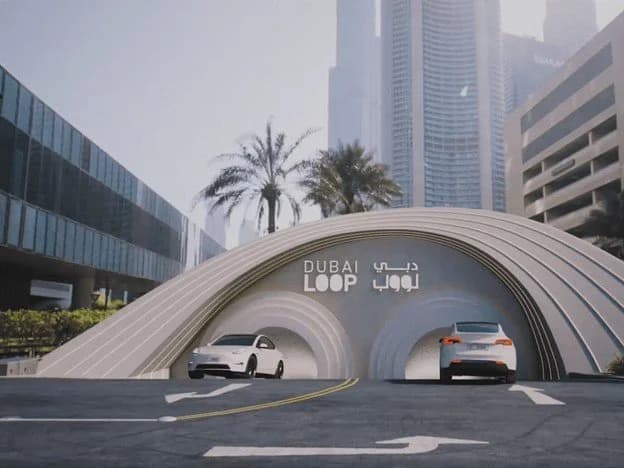
Dubai has launched the first phase of the Dubai Loop underground transport project in partnership with Elon Musk’s Boring Company.
-
The pilot route will stretch about 6.4 kilometres and connect DIFC directly to the Dubai Mall through four stations.
-
The initial phase investment is approximately AED 565 million, with the full project expected to cost around AED 2 billion.
-
The full network is planned to extend beyond 22 kilometres and include 19 stations across major business districts.
-
Passenger capacity is expected to reach around 30,000 people per day once fully operational.
-
Travel speeds within the tunnel network could reach up to 160 kilometres per hour.
-
The system allows direct travel to a destination without intermediate stops.
-
Construction uses advanced tunnelling methods designed to reduce disruption to roads and utilities.
-
The project connects key economic hubs including DIFC, Dubai World Trade Centre and Business Bay.
-
Infrastructure delivery is expected to be significantly faster than traditional metro or surface transport systems.
Dubai’s Next Infrastructure Leap Is Here.
What happens to property values when travel times collapse between the most important business districts in a city?
History gives us a very clear answer. Property values tend to move first, and they move fast.
Dubai has just taken another decisive step in shaping its future urban landscape with confirmation that construction will begin immediately on the Dubai Loop, an underground transport system developed with Elon Musk’s Boring Company. This is not simply another transport announcement. It signals something bigger. It signals Dubai continuing to compress time and distance inside the city.
For investors watching Dubai from London, Singapore, Hong Kong or New York, the message is simple. Infrastructure investment here is accelerating, not slowing.
And in real estate, infrastructure is often the earliest signal of where future value will concentrate.
Let’s break down why this matters and where opportunity may emerge.
Why Transport Infrastructure Moves Property Markets
Transport projects change behaviour. When commuting becomes easier, areas that once felt distant suddenly become convenient. Office districts become closer to residential areas. Shopping, dining and entertainment clusters merge into a more connected urban experience.
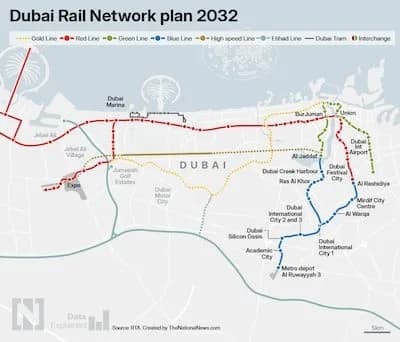
Dubai has already seen this effect with the Metro expansion. Communities connected to stations saw increased demand and rental resilience. Business hubs became easier to access. Investor interest followed infrastructure lines.
The Dubai Loop takes this concept further.
Unlike traditional public transport, the system allows direct travel to destination stations without stopping at intermediate points. That means someone living near Business Bay could move quickly toward DIFC or Dubai Mall without multiple connections or delays.
In simple terms, the city becomes smaller.
And when cities become smaller, prime locations expand.
The Route That Matters Most to Investors
The pilot route connects DIFC and Dubai Mall, arguably two of the most commercially powerful zones in the region.
DIFC remains one of the fastest growing financial centres globally. Financial firms, hedge funds, family offices and technology companies continue to establish operations there. Office space availability is tightening, and premium rents have climbed sharply.
Dubai Mall and Downtown Dubai remain global tourism and retail anchors, drawing millions of visitors annually while serving as one of the most desirable residential locations in the region.
Business Bay, positioned between these zones, has been rapidly evolving from a mixed commercial district into a genuine residential and lifestyle community.
By connecting these hubs through high speed underground transport, Dubai effectively links three powerful demand generators.
This matters to investors because rental demand follows employment and lifestyle hubs. When movement becomes seamless, tenant pools widen, reducing vacancy risk and supporting long term capital growth.
Why Overseas Investors Should Pay Attention Now
Overseas investors often ask the same question. Has Dubai already had its run, or is there still opportunity ahead?
Infrastructure projects like this typically signal continuation, not conclusion, of growth cycles.
Dubai’s population continues to expand, businesses continue relocating here, and tourism numbers remain strong. Government investment in infrastructure signals long term confidence in sustained growth.
For overseas investors, Dubai continues to offer three powerful advantages.
First, rental yields remain attractive compared to many global gateway cities. Net returns often outperform London, New York or major European markets, particularly for well selected properties in growth corridors.
Second, there is no annual property tax, no capital gains tax and no income tax on rental earnings. This significantly enhances real investor returns.
Third, property ownership can support residency through the UAE Golden Visa programme, providing long term access to one of the world’s safest and fastest growing economies.
When infrastructure investment and investor friendly policy move in the same direction, property markets tend to strengthen.
Elon Musk’s Boring Company Adds Global Attention
Another interesting dimension is branding and perception.
Elon Musk’s involvement draws global attention. His companies have already demonstrated underground transport systems in Las Vegas, where millions of passengers have used the Loop system since launch.
Dubai aligning with companies at the forefront of transport innovation reinforces the city’s image as a global testing ground for future urban solutions.
Perception matters in real estate. International attention brings business interest, which brings population growth, which ultimately drives property demand.
In many ways, Dubai continues to position itself as a city of the future rather than a city relying on legacy infrastructure.
Areas Likely to Benefit Most
While headline locations like Downtown and DIFC already command premium prices, infrastructure often pushes demand outward.
Business Bay continues to evolve rapidly, with new residential towers and waterfront developments attracting both investors and end users.
Communities slightly outside prime zones, yet connected through transport, often experience the strongest percentage growth. Investors who identify these areas early tend to capture both rental demand and capital appreciation.
We have seen similar patterns near previous Metro expansions. Rental demand increased as commute times reduced, and investors who entered early benefited most.
Infrastructure does not create instant gains, but it consistently reshapes demand patterns over several years.
Investment Strategy in a Changing City
Smart investors look beyond today’s skyline. They look at tomorrow’s movement patterns.
Questions investors should now be asking include:
Where will future transport connections increase accessibility?
Which communities will benefit from improved connectivity?
Which developers are delivering quality projects aligned with infrastructure growth?
This is where strategy matters more than simply buying property.
Some investors prioritise rental income stability. Others focus on long term appreciation. Some combine both through diversified portfolios.
The key is aligning investment with infrastructure, population trends and supply dynamics.
Why Many Investors Work Directly With Steven Leckie
For overseas investors, navigating Dubai property remotely can be challenging. Understanding developer track records, supply pipelines, payment structures and true rental demand requires local market experience.
Having worked in Dubai real estate since 2003 and through multiple market cycles, Steven Leckie helps investors filter signal from noise. His approach is strategy driven rather than sales driven, focusing on matching investments to individual goals.
Investors often reach out to Steven not just to buy property, but to understand timing, portfolio structure and exit strategies.
With major infrastructure announcements like Dubai Loop, investors often want clarity on where opportunity sits before competition increases.
A short conversation can often save months of uncertainty and prevent costly mistakes.
Lifestyle Value Is Also Rising
Investment decisions are increasingly tied to lifestyle considerations.
Dubai’s appeal goes beyond tax advantages. Safety, infrastructure quality, climate, connectivity and business friendliness continue attracting global professionals and entrepreneurs.
Improved mobility adds to quality of life. Reduced travel times improve daily routines, making the city more livable and appealing for long term residents.
Property markets thrive where people want to live, not just invest.
Dubai continues strengthening both propositions simultaneously.
A Personal Market View
Looking at current momentum, infrastructure investment, business expansion and population growth, Dubai’s trajectory still appears positive.
However, opportunity will not be evenly distributed.
Some locations will outperform significantly. Others may struggle with oversupply or poor design. Developer quality and project positioning remain critical.
Investors who act strategically rather than emotionally will likely benefit most over the coming years.
The Dubai Loop announcement is not a signal to rush blindly into purchases. Instead, it is a signal to reassess strategy, study demand patterns and identify locations positioned to benefit from improved connectivity.
The Bigger Picture
Every major city evolves in phases.
Dubai’s next phase appears focused on intelligent mobility, technology adoption and sustainable urban growth. Infrastructure like Dubai Loop reinforces that direction.
For investors watching from abroad, the real question becomes:
Do you want to enter markets after growth becomes obvious, or before?
Because once infrastructure is delivered and demand surges, pricing tends to move quickly.
Those who prepare early usually capture the strongest returns.
And in Dubai, preparation begins with understanding where the city is going next.